
Plan arrivals, not just road closures
An event creates changing traffic demand before, during and after the advertised program. ETG supports event traffic management for organisers across the Sunshine Coast and South East Queensland. The plan should consider parking capacity, entry queues, pedestrian crossings, public transport, deliveries and emergency access. A quiet venue road can become congested when vehicles arrive at the same time. Start by explaining the event footprint, likely arrival patterns and how the venue normally operates so temporary controls can be discussed in context.
Separate people and vehicles
Pedestrians may move between parking areas, event gates, food vendors and toilets in large groups. Temporary fencing, controlled crossings and clear routes can help avoid conflict with service vehicles. Accessible routes should be considered from the outset, including people using wheelchairs, mobility aids or prams. Event staff and volunteers need to understand where they can direct people and when a qualified traffic controller is required. Marshals are not automatically authorised to control traffic on a public road.
Approvals and staged event operations
The event organiser should confirm venue permissions, local council conditions and any road authority approvals. Road closures, public-road signage or changed access arrangements may require additional documentation. Discuss establishment and pack-down as separate stages because contractors and delivery vehicles often need access outside public opening hours. An event traffic plan should include an escalation contact and an approach to unexpected weather or congestion. We can scope the proposed traffic arrangements and crew requirements, but attendance estimates and approval conditions must come from the organiser and relevant authority.
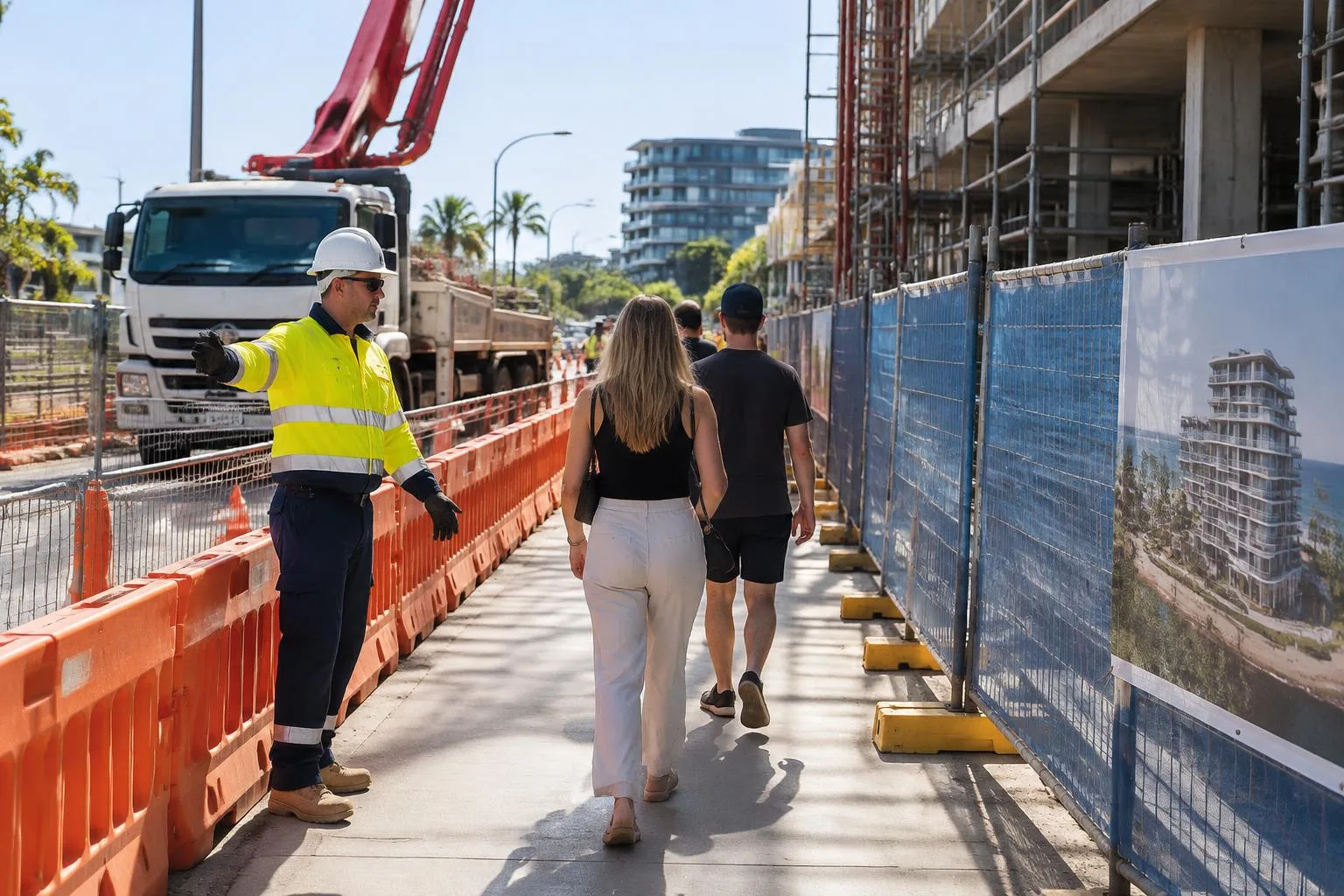
AI-generated illustration of a Queensland traffic management arrangement; not an ETG project record.
A coordinated process from enquiry to handover
Start by sending the location, scope and proposed dates. We review the traffic requirements with you and identify what further information is needed to prepare a meaningful quote. Where planning, permits, equipment and personnel are separate parts of the job, these should be confirmed individually so nothing is assumed to be included. The road authority sets approval conditions; the principal contractor remains responsible for its construction activities. Agree the work stages and the contact person for each responsibility before the site is established. During implementation, the crew should check the actual conditions against the current documentation and communicate any differences. Weather, traffic demand and plant movements may require a review. At the end of the activity, the handover should cover safe reopening and any controls that remain in place.
Queensland standards and site safety
Temporary traffic arrangements must be considered against the Queensland MUTCD Part 3, the Queensland Guide to Temporary Traffic Management and applicable TMR or council requirements. The qualifications needed depend on the role being performed: controlling traffic, implementing a scheme and designing a scheme are not interchangeable tasks. Pre-start briefings, equipment inspections, communication checks and a clear escalation process help keep the documented arrangement effective. ETG draws on the civil construction background of Exceed Concrete Construction, established on the Sunshine Coast in 1997. That connection helps us understand how concrete deliveries, excavation, changing work fronts and construction access affect traffic operations. Group quality, environmental and safety systems support a coordinated approach; project-specific documentation and current credentials should still be requested for your procurement review.
Coverage and a job-specific quote
Our head office is in Cooroy, with traffic management enquiries welcomed for Sunshine Coast, Noosa, Maroochydore, Caloundra, Gympie, Brisbane, Moreton Bay and Gold Coast works. Crew availability, travel, shift length, site complexity and equipment requirements affect the quote. Share any existing TMP, TGS or permit documents, including the current revision and approval conditions. If dates are not yet fixed, explain the likely program and decision points rather than selecting an arbitrary start date. For urgent or after-hours requirements, call 07 5449 8813 so the location and immediate risks can be discussed. A quote request does not confirm a booking or authority approval. ETG will clarify the proposed scope and next steps with you.
Current standards and permit information: