
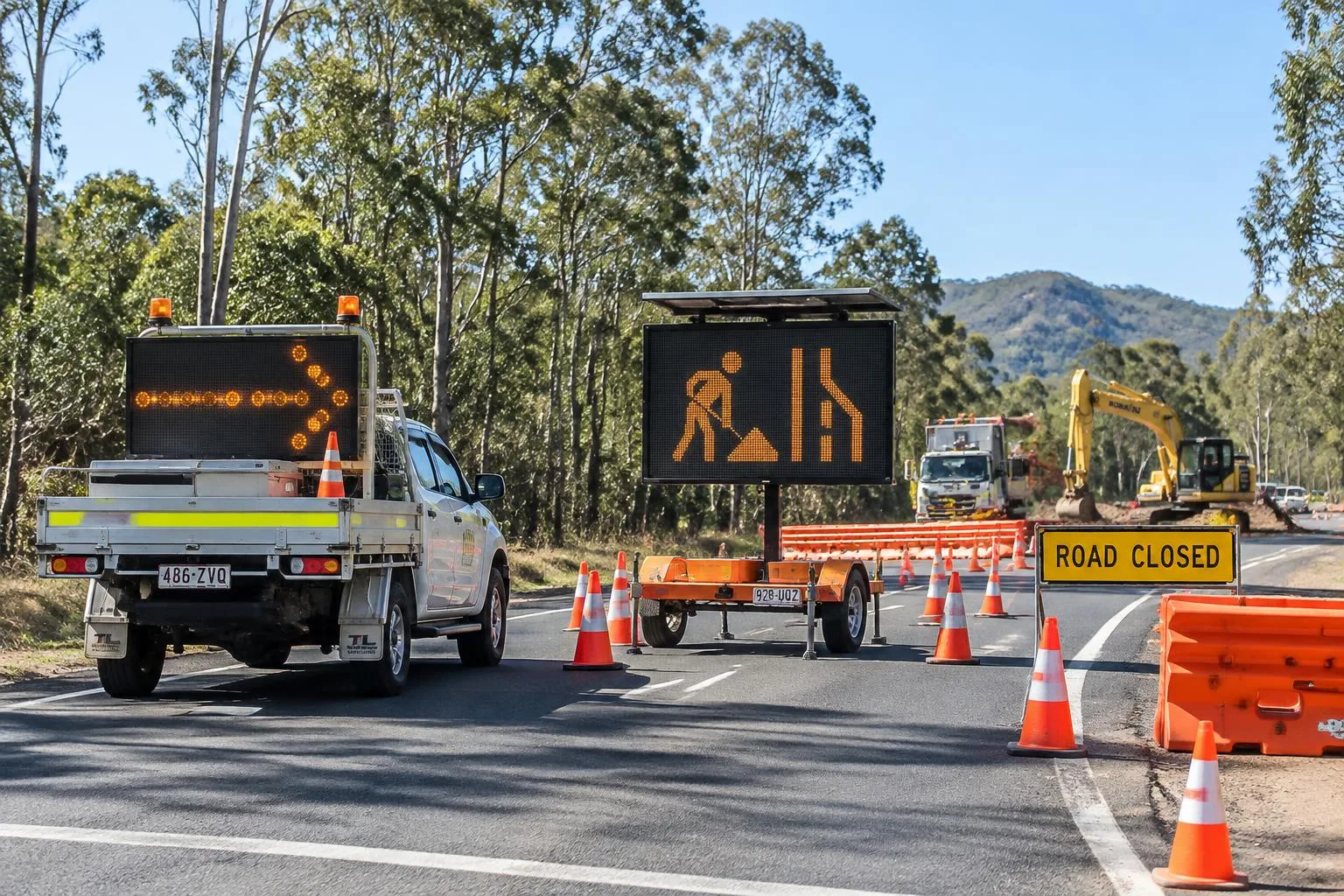
AI-generated supporting illustration. Always check current authority requirements for your specific job.
The drawing that explains the arrangement
A traffic guidance scheme, or TGS, is a drawing showing how temporary traffic will be managed for a defined work activity. It identifies the location of signs and devices, the work area and the intended path for vehicles or pedestrians. Queensland road authorities expect arrangements to be considered against the applicable temporary traffic management standards. The drawing needs to reflect the road where the work actually happens, rather than an unrelated generic site.
TGS versus traffic management plan
A TMP is the broader document explaining the risks, responsibilities and management approach for the project. A TGS is the operational layout for a particular stage. One TMP may reference several schemes: establishment, a lane closure, a changed pedestrian route and reopening can require different arrangements. Ask the designer which drawings and management documents your project and road authority require.
Information a designer needs
Provide the job address, road width, speed environment, intersections, access points and proposed work footprint. Include plant movements, concrete deliveries and any effect on footpaths or public transport. Photos and marked-up plans can help, but they do not remove the need to assess actual site conditions. Explain whether the work stays in one place or moves along the road.
Design and implementation are separate roles
An appropriately qualified designer prepares the scheme. A traffic management implementer establishes and checks the arrangement on site. Traffic controllers perform their authorised operational role within that arrangement. Having one qualification does not automatically authorise all three tasks. Keep the current drawing revision available and agree the process for reviewing changes before work begins.
A drawing is not permission to close a road
The relevant road authority determines approvals and conditions. A council road, a state-controlled road and work affecting adjoining assets can have different requirements. Confirm the permit pathway before committing crews. Queensland references include MUTCD Part 3 and the Queensland Guide to Temporary Traffic Management. Requirements can change, so consult the current official documents for the specific work.
Your next practical step
Send ETG your site location, construction scope and intended work hours. Include any existing TMP, TGS or approval conditions. We can discuss TGS design and the relationship between planning, permits and on-site coverage. Do not assume that a small job is exempt: even a short footpath obstruction or delivery operation can affect public safety and require review.
- TMR temporary traffic management standards
- TMR traffic controller accreditation
- Sunshine Coast Council road and footpath permit information
This guide is general information, not an approval or a site-specific traffic plan. Fees, requirements and conditions are determined by the relevant authority.